

Ceiling-Mounted vs. Pedestal RFID for Fashion Stores


Author
Global Marketing Manager
from Xiaota RFID, we focusing on RFID technology, smart retail solutions, and digital transformation for global businesses
A customer walks out with a new jacket while another arrives with a stroller. Your entrance needs to welcome both—and help your team protect the stock. For fashion retailers, choosing an RFID anti-theft system means considering the doorway, the garments and the checkout process together.
Two common options are ceiling-mounted readers and floor-mounted RFID gates. Both can identify tagged items, but they fit the store in different ways.
What Is a Ceiling-Mounted RFID Anti-Theft System?
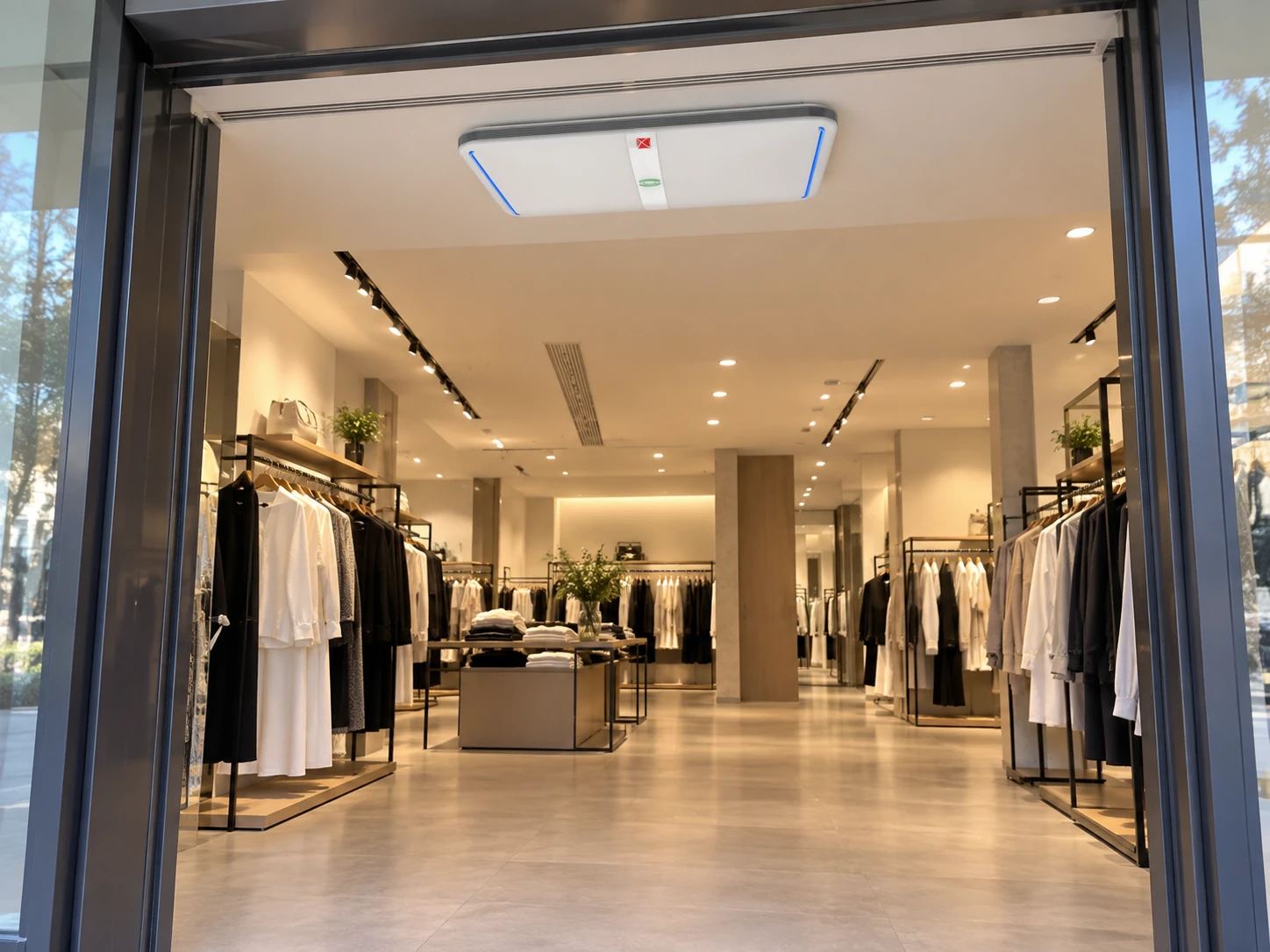
A ceiling-mounted RFID reader monitors tagged merchandise from above the entrance. It keeps the floor clear, making it an option for retailers that want an open storefront and easy customer movement.
The XTRFID XTD4121 RFID Ceiling Reader analyses tag phase trajectories to distinguish entry from exit. Its direction judgement does not require auxiliary infrared sensors, radar or AI cameras. Configurable EPC filters and alarm rules help connect detection with the store’s agreed loss-prevention workflow.
What Is a Pedestal RFID Gate?
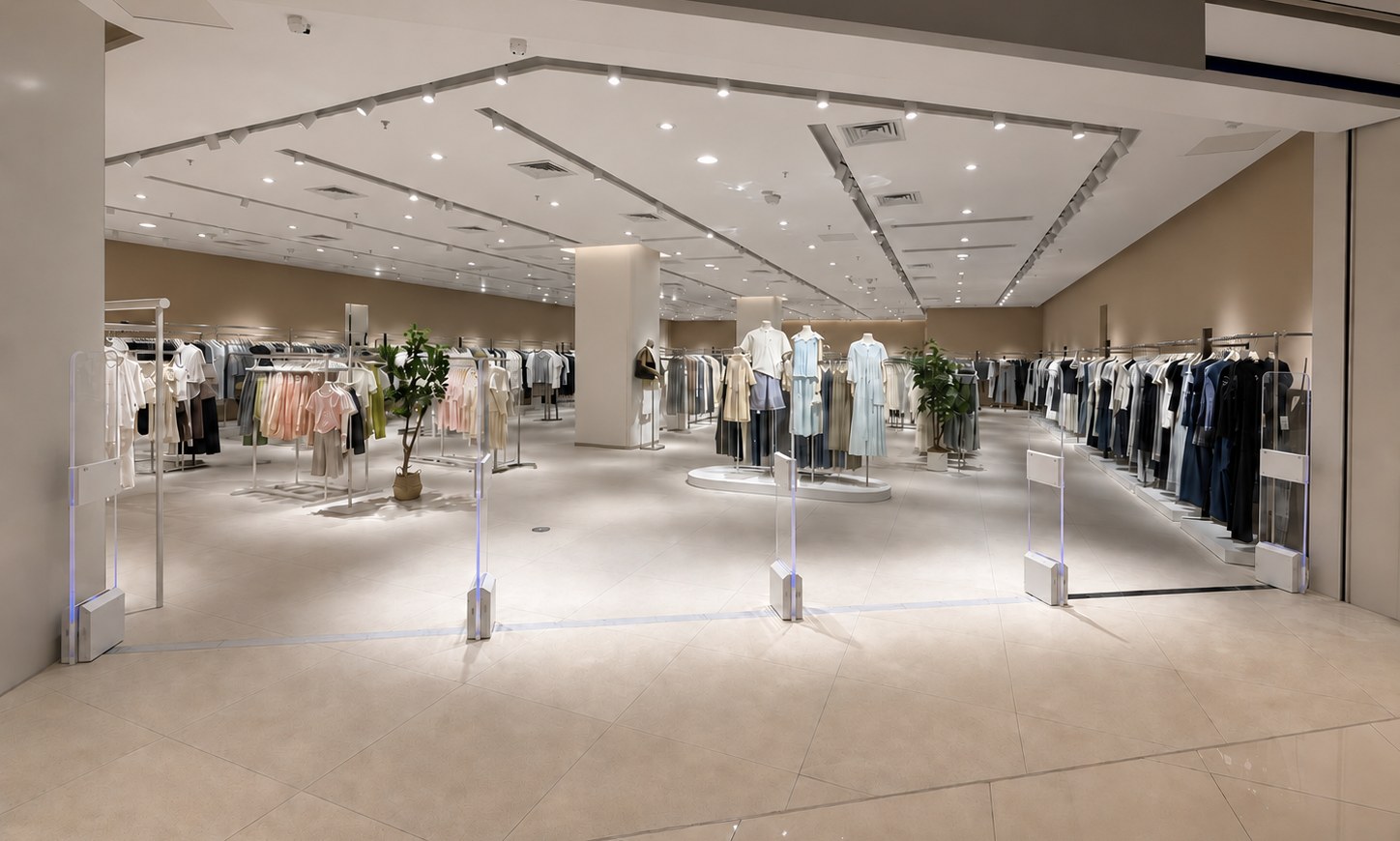
A pedestal RFID gate places upright antenna panels beside the passage. The hardware creates a visible security checkpoint and can suit store exits, stockroom doors or other defined movement points.
The XTRFID XTD4231 RFID EAS Gate connects item-level event capture with compatible visual or audible alerts. Network and serial interfaces support connection to an agreed retail application. Its panels need floor space, so the installation must preserve a comfortable passage for shoppers and staff.
Ceiling-Mounted vs. Pedestal RFID: A Quick Comparison
| Consideration | Ceiling-mounted RFID | Pedestal RFID gate |
|---|---|---|
| Installation | Above the entrance; requires suitable mounting and cabling. | Beside the passage; requires floor positioning and fixation. |
| Store appearance | Keeps the entrance floor open. | Creates a visible security checkpoint. |
| Customer movement | Leaves floor width available for access. | Panel placement determines the clear passage width. |
| Maintenance access | May require safe access equipment. | Hardware is accessible at floor level. |
| Project planning | Check ceiling height, mounting, nearby metal and detection zone. | Check passage width, floor layout, nearby stock and detection zone. |
Does an Overhead Reader Always Perform Better?
No installation style guarantees better detection. Tag placement, garment material, nearby displays, movement speed and reader settings all affect results. Both options should be tested with the tags and merchandise your store actually uses.
RFID detection also needs useful business rules. When connected to POS or loss-prevention software, item identities can be checked against sold or authorised status. That result depends on the integration; the reader alone does not decide whether a garment has been paid for.
Which Option Fits Your Fashion Store?
Consider ceiling mounting when an open entrance is a design priority and the overhead installation is practical. Consider pedestal gates when a visible checkpoint suits the layout and there is enough clear floor space. Compare the complete installation and integration scope when reviewing costs.
XTRFID brings tags, readers, software and deployment support together for apparel retail. Contact our team with your entrance dimensions, tag type and checkout setup to discuss a suitable configuration.
- How RFID Helps Clothing Stores Keep the Right Sizes on the Sales Floor
- Ceiling-Mounted vs. Pedestal RFID for Fashion Stores
- RFID Security Tags for Apparel: How They Help Prevent Loss
- What Is RFID Tag in Apparel Industry?
- What Is EAS?
- What Is RFID?
- Xiaota RFID Showcases Smart Retail Solutions at IOTE Shenzhen 2026
- Xiaota Strengthens Workplace Safety with First Aid Training