

What Is RFID Tag in Apparel Industry?


Author
Global Marketing Manager
from Xiaota RFID, we focusing on RFID technology, smart retail solutions, and digital transformation for global businesses
Imagine a customer finds the perfect jacket but needs another size. The sales associate checks the stockroom, the inventory screen and a nearby rack, yet no one is sure whether the item is available. For apparel teams, this small moment is familiar: one missing product record can mean a lost sale and a disappointed shopper.
RFID clothing tags help connect the physical garment with a digital item identity. When tags, readers and software work together, brands can receive goods, count stock, locate products, verify shipments and support checkout with less repetitive scanning. The result is not simply faster work. It is greater confidence that the right item is in the right place when a customer wants it.
In short: an RFID tag in clothing uses a small chip and antenna to give an individual garment a machine-readable identity. A compatible reader captures that identity with radio waves, while software connects it with product and inventory records.
What Is an RFID Tag in Clothing?
An apparel RFID tag is an identification device made from an integrated circuit, often called a chip, and an antenna. The chip carries an identifier. The antenna allows the tag to communicate with an RFID reader. These parts can be built into an adhesive label, a fashion hang tag, a sewn label or another garment-compatible construction.
Most item-level retail programs use passive UHF RFID. A passive tag has no battery.It receives signals from the readers RF field. Sends back its identification information. Because a direct line of sight is not needed a compatible system can read tags on one garment at once so there is no need to show each barcode to the scanner one by one.
The tag doesnt need to store every detail. It can simply link to a SKU, style, color, size order or individual item record in software. That connection is what makes RFID chips in clothing, for business operations.
How Do RFID Clothing Tags Work?
- Give the garment an identity. The RFID tag is attached at the factory, warehouse or another controlled point and associated with the correct product record.
- Read the tag at a work point. Handheld RFID readers capture identifiers during the receiving, inventory, transfer, order verification, or checkout process..
- Apply the business rule. RFID software decides what the read means, such as confirming a delivery, updating a count or checking an order.
- Share the result. Agreed interfaces can pass validated events to ERP, WMS, POS or e-commerce systems.
Why Do Apparel Businesses Use RFID Tags?
Faster Receiving and Inventory Counts
Clothing assortments contain many similar styles, colours and sizes. RFID can capture multiple items without aligning the barcode on each tag. This helps warehouse and store teams reduce the time spent on duplicate scanning and inventory, and greatly improves work efficiency.
More Confident Product Search and Replenishment
When stock records are more current, staff can respond to shoppers with greater confidence. A requested size may be in the stockroom, on another fixture or waiting in a returns area.
Clearer Warehouse-to-Store Movement
The same item identity can support factory tagging, warehouse receiving, shipment verification, store receiving and stock transfer. Teams gain a clearer record of when a garment was detected and what happened next.
A Better Foundation for Omnichannel Retail
Click-and-collect and ship-from-store depend on reliable stock information. RFID cannot solve every fulfilment problem, but it can provide a stronger item-level foundation for deciding what is truly available to promise.
Three XTRFID Tag Options for Apparel
1. UHF RFID Label for Apparel
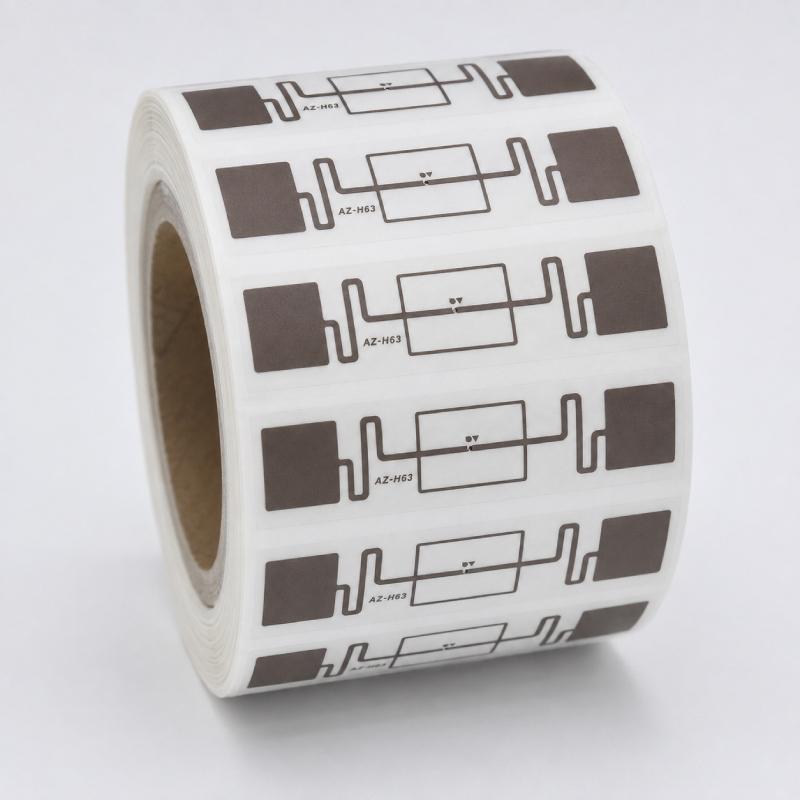
This compact, printable label suits item identification on garments, product packaging and operational units. Xiaota's label uses a unique factory-fixed identity that can be associated with product data in software without on-site chip writing. It is a practical choice when a low-profile adhesive format and scalable batch identification matter.
View the UHF RFID Label for Apparel
2. RFID Hang Tag for Apparel and Fashion
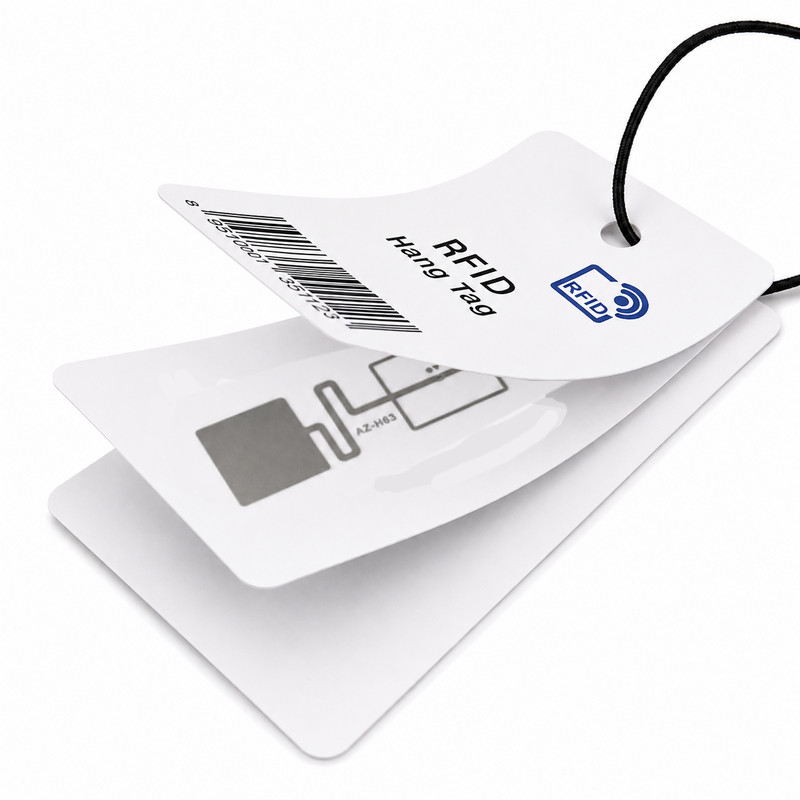
A visible RFID hang tag provides room for brand artwork, product details and price information while adding UHF RFID identification. It fits naturally with apparel, footwear and fashion accessories and is normally removed after purchase. Choose it when presentation is part of the customer experience as well as the inventory workflow.
View the RFID Hang Tag for Apparel and Fashion
3. RFID Sewed Tag for Apparel
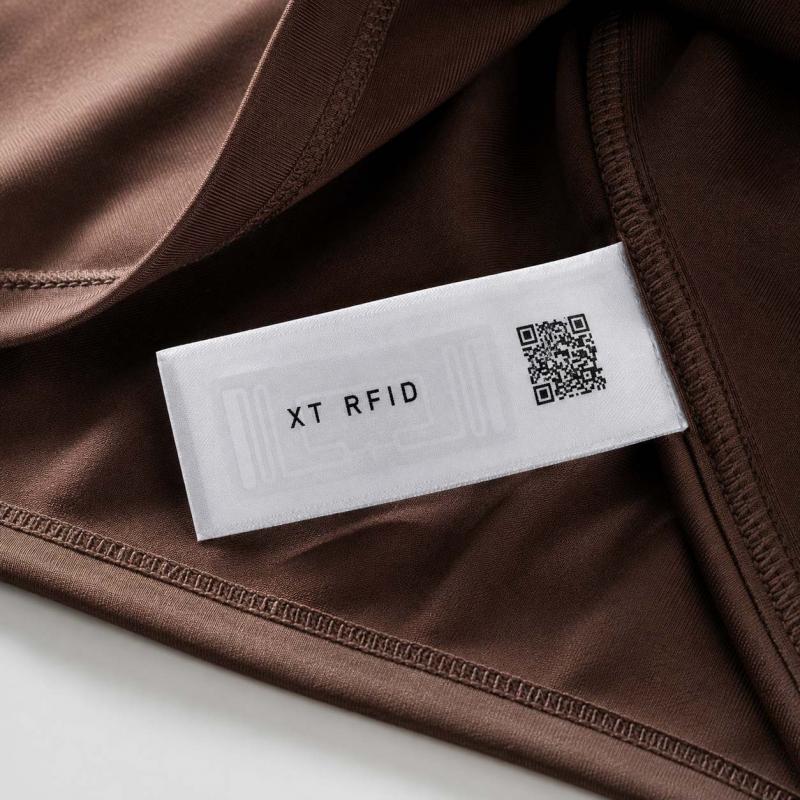
A sewed RFID tag is integrated into a seam, internal label area or another approved textile construction. It can keep the item identity with the garment beyond the removable hang-tag stage, supporting extended product identification, returns and traceability workflows. Sewing does not automatically make a tag washable; the final construction must be tested against the intended care conditions.
View the RFID Sewed Tag for Apparel
How to Choose RFID Tags for Clothing
- Garment and material: fabric, metallic trims, liquids and nearby materials can affect reading performance.
- Attachment and appearance: decide whether the tag should be adhesive, visible and branded, or integrated into the garment.
- Product lifecycle: confirm whether identification is needed only before sale or should remain available for returns, authentication or later services.
- Reading environment: test actual garments in the cartons, racks, baskets and work areas where reads will occur.
- Data and system rules: define how each tag identity is linked with the correct style, colour, size and item record.
Frequency notice: XTRFID products can be configured to comply with the local RFID frequency standards of the destination country or region. Confirm the required frequency band before requesting a quotation.
From a Clothing Tag to a Connected RFID Workflow
XTRFID focuses on apparel and fashion operations. We bring together tag selection, RFID readers, self-developed software, ERP/WMS/POS integration, workflow testing, deployment and ongoing service. This helps brands move from a tag sample to a practical process that store and warehouse teams can use every day.
Start with one clear goal and representative garments. Test the tag, placement, reader configuration and software rules together. A small, realistic pilot often reveals more than a perfect demonstration with one exposed tag.
RFID Clothing Tags: Frequently Asked Questions
Can RFID clothing tags be read without seeing them?
Yes. RFID uses radio communication, so the reader does not need the same direct visual access required by a barcode scanner. Performance still depends on tag placement, materials, distance, reader settings and the surrounding environment.
Do RFID tags continuously track a person's location?
A passive UHF tag does not transmit continuously and has no GPS. It responds when it enters the field of a compatible reader. Businesses should still design post-sale handling and data practices around their market, policy and privacy requirements.
Are RFID tags in clothing the same as anti-theft tags?
Not automatically. RFID primarily provides item identification and data capture. EAS systems are designed for exit alarms. Retailers that need both functions should evaluate compatible hardware, software and combined RFID/EAS tag options as one loss-prevention workflow.
Can RFID and barcodes be used together?
Yes. An apparel tag can carry printed text and a barcode as well as an RFID inlay. Each method can serve the process where it works best, while both connect to the same product data.
Choose a Tag Around the Garment and the Workflow
Tell XTRFID what you need to tag, where the item will be read and which systems should use the data. We can help evaluate the tag format, readers, software and rollout plan as one connected apparel RFID project.
- How RFID Helps Clothing Stores Keep the Right Sizes on the Sales Floor
- Ceiling-Mounted vs. Pedestal RFID for Fashion Stores
- RFID Security Tags for Apparel: How They Help Prevent Loss
- What Is RFID Tag in Apparel Industry?
- What Is EAS?
- What Is RFID?
- Xiaota RFID Showcases Smart Retail Solutions at IOTE Shenzhen 2026
- Xiaota Strengthens Workplace Safety with First Aid Training