

Guangdong Xiaota IoT Technology Co., Ltd.

Facebook Linkedin Youtube Instagram
other
RFID for Large-Format Fashion Retail

Build Trusted Inventory Across Every Fashion Hypermarket Operation

Large-format fashion retailers manage high item volumes across receiving areas, stockrooms, sales floors and checkout zones. When inventory data falls behind physical stock movement, teams spend more time counting and searching while replenishment, checkout and loss control become harder to manage.

Xiaota connects UHF RFID tags, readers, self-developed software, business-system integration and on-site implementation into one practical RFID solution for retail. This creates item-level visibility from warehouse receiving to store inventory, replenishment, checkout and exit.
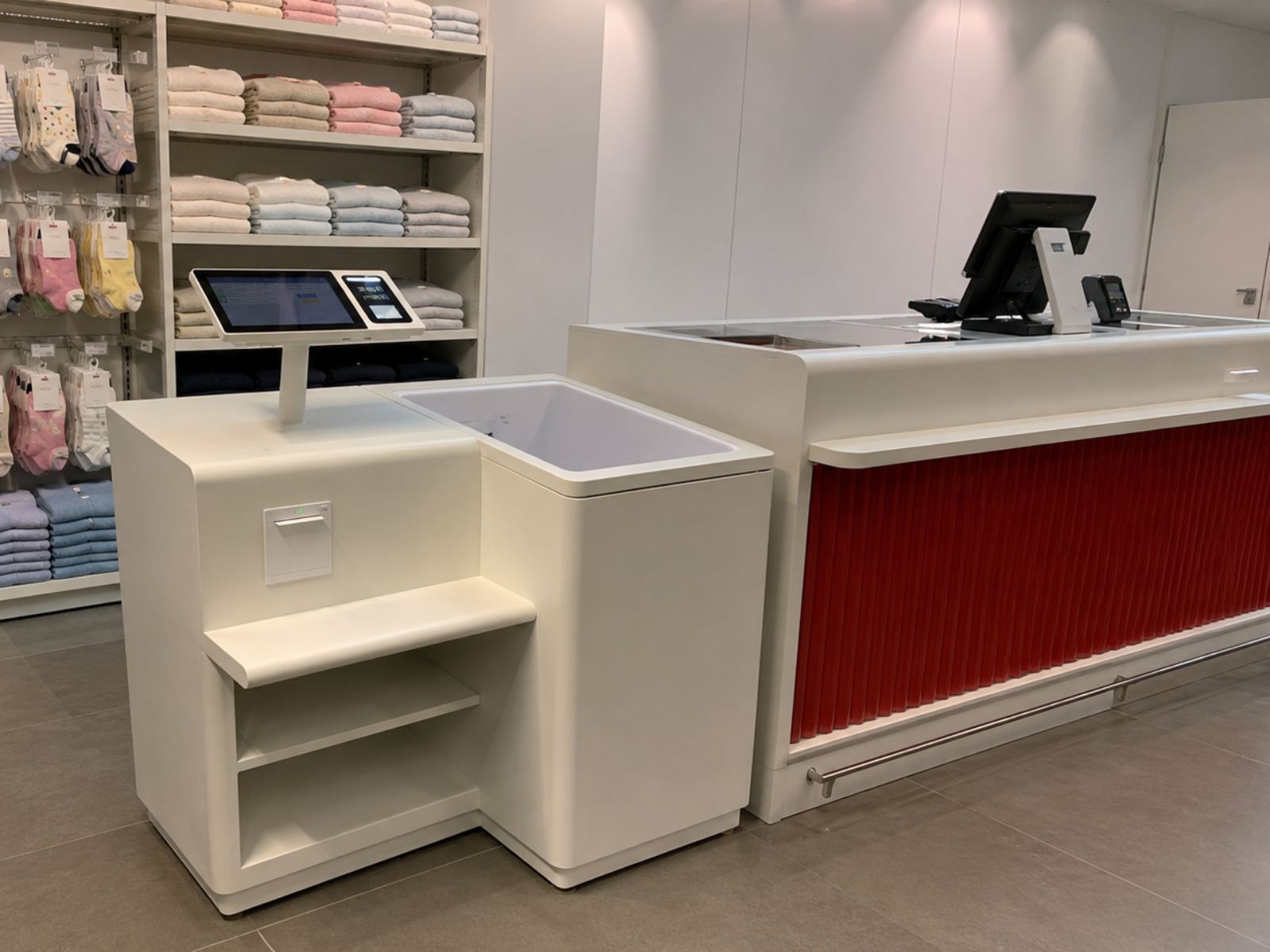
RFID solutions for a large-format fashion hypermarket
Fashion Hypermarket Challenges

High Item Volumes Make Small Inventory Gaps Expensive

A large sales floor may hold thousands of styles, colours and sizes. The challenge is not simply having stock—it is knowing what is physically available, where it should move next and whether each transaction has been recorded correctly.

01

Slow Receiving and Verification

Opening cartons and scanning items one by one slows inbound work and makes delivery discrepancies harder to identify quickly.

02

Difficult Inventory Counting

Manual counts require experienced staff, interrupt daily work and are often performed too infrequently to keep inventory records current.

03

Delayed Replenishment

Stock can remain in the back room while the correct size or style is missing from the sales floor, creating preventable lost-sales opportunities.

04

Checkout Bottlenecks

Scanning barcodes individually creates queues at busy times and increases dependence on staffed checkout counters.

05

Unexplained Product Loss

Without item-level movement records, misplaced or unpaid merchandise may remain invisible until the next physical inventory check.

06

Disconnected Operational Data

Receiving, inventory, POS and loss-prevention data may sit in separate processes, making it difficult to maintain one reliable stock position.
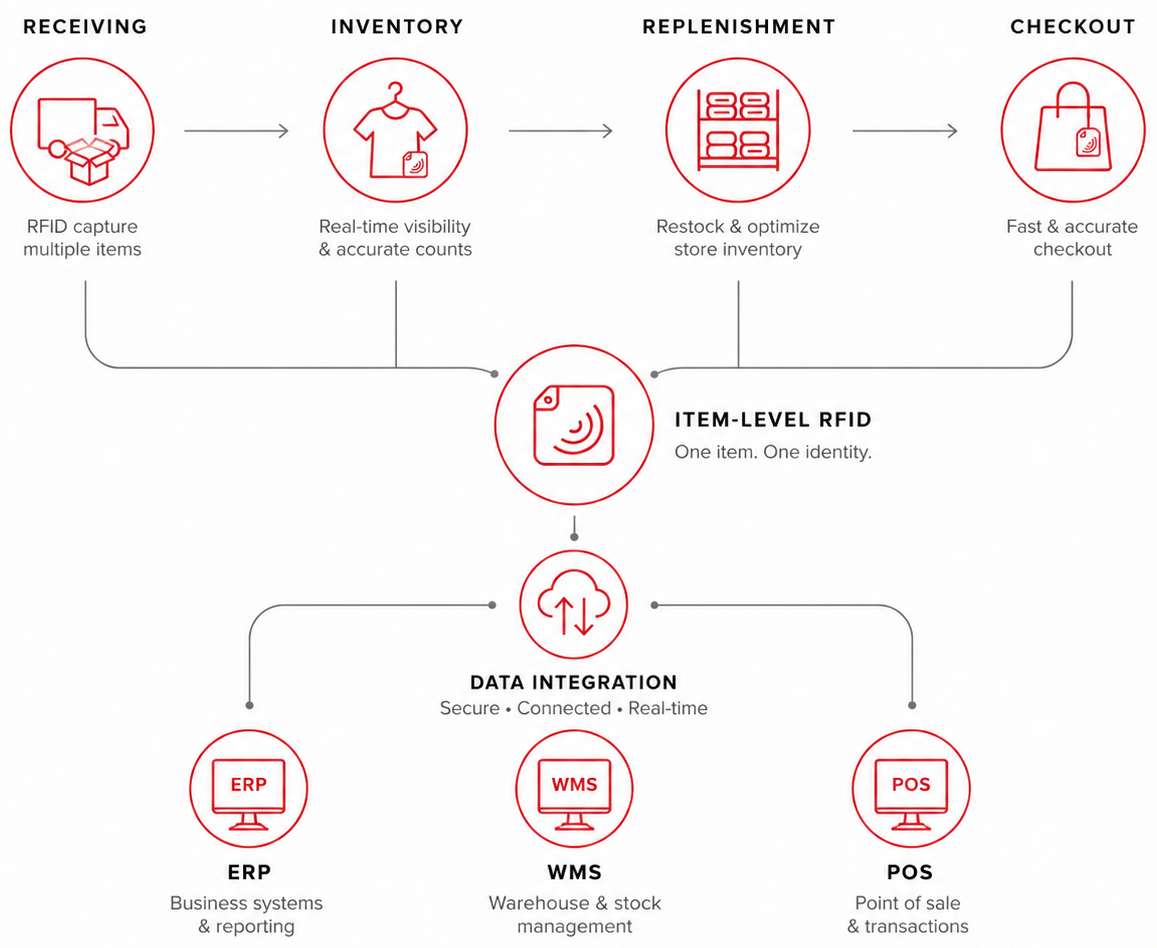
Fashion hypermarket receiving and RFID inventory management
One Item-Level Inventory Foundation

Connect Receiving, Inventory, Replenishment and Checkout

Each RFID-tagged garment carries a unique item identity. RFID readers capture multiple items without scanning every barcode individually, while Xiaota's RFID software records receiving, inventory, transfers, checkout and other operational events.

Through standard API integration, RFID data can be connected with existing ERP, WMS and POS environments. Store and warehouse teams gain a more current view of physical stock and clearer tasks for receiving, counting, replenishment and exception handling.

More than an RFID device deployment Xiaota can provide tags, RFID devices, self-developed software, integration, process testing, on-site deployment, training and ongoing service as one implementation path.
Featured RFID Solutions
Four Connected RFID Workflows for Fashion Hypermarkets
From tag preparation to warehouse handling, store inventory and the point of exit, Xiaota connects eight operating processes into four practical RFID solutions.

01 / ITEM IDENTITY

RFID Tagging & Item Identification

Print, encode and apply RFID tags to create a unique digital identity for every item before it enters inventory operations.

Included workflows: Tag Printing · Tag Installation

  • RFID tag printing and encoding
  • EPC assignment and product information binding
  • Tag application and item-level identification
  • Traceability data preparation

Explore this solution →

02 / WAREHOUSE FLOW

RFID Warehouse Receiving & Shipping

Accelerate bulk receiving and verify outbound shipments with RFID, reducing manual scanning, shipment errors and warehouse processing time.

Included workflows: Warehouse Receiving · Shipping Verification

  • Bulk warehouse receiving and RFID inbound verification
  • Shipment and quantity verification
  • Wrong-item and missing-item detection
  • ERP and WMS data synchronization

Explore this solution →

03 / STORE INVENTORY

RFID Store Inventory & Stock Transfer

Maintain accurate store inventory through faster receiving, stocktaking, item movement tracking and transfer verification.

Included workflows: Store Receiving, Shipping & Stocktaking · Store Transfer

  • Store receiving and shipping
  • RFID stocktaking and cycle counting
  • Store-to-store transfer verification
  • Inventory synchronization and replenishment support

Explore this solution →

04 / STORE EXIT

RFID Checkout & Loss Prevention

Improve checkout efficiency while protecting merchandise through item-level RFID identification and exit monitoring.

Included workflows: RFID Checkout · RFID Anti-theft

  • RFID self-checkout and multi-item checkout
  • POS integration and transaction-status updates
  • RFID anti-theft monitoring and unpaid-item detection
  • Exit verification and loss-prevention alerts

Explore this solution →

Store Execution

Turn Inventory Data into Clearer Daily Actions

Accurate counts are only useful when teams can act on them. RFID supports a practical operating rhythm in which receiving updates inventory, cycle counts correct discrepancies, replenishment moves available products to the sales floor and checkout records the final transaction.
Receive with less item-by-item handlingCapture multiple tagged garments and compare the result with expected inbound data.
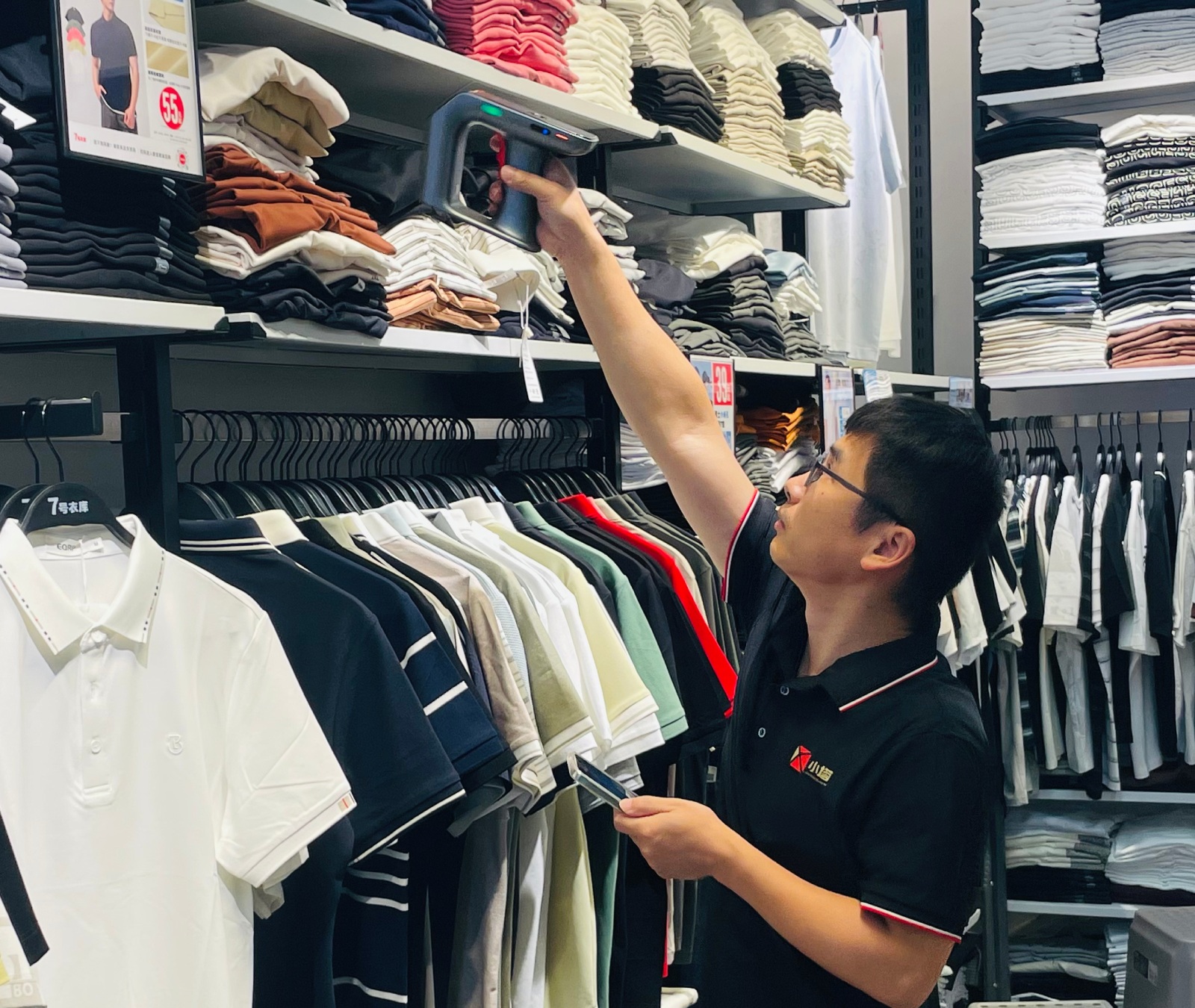
Count more frequentlyUse handheld or fixed RFID reading methods to perform cycle counts without closing the store for long periods.
Replenish with better stock confidenceHelp teams identify products available in the stockroom but missing from the sales floor.
RFID-supported apparel replenishment in a fashion hypermarket
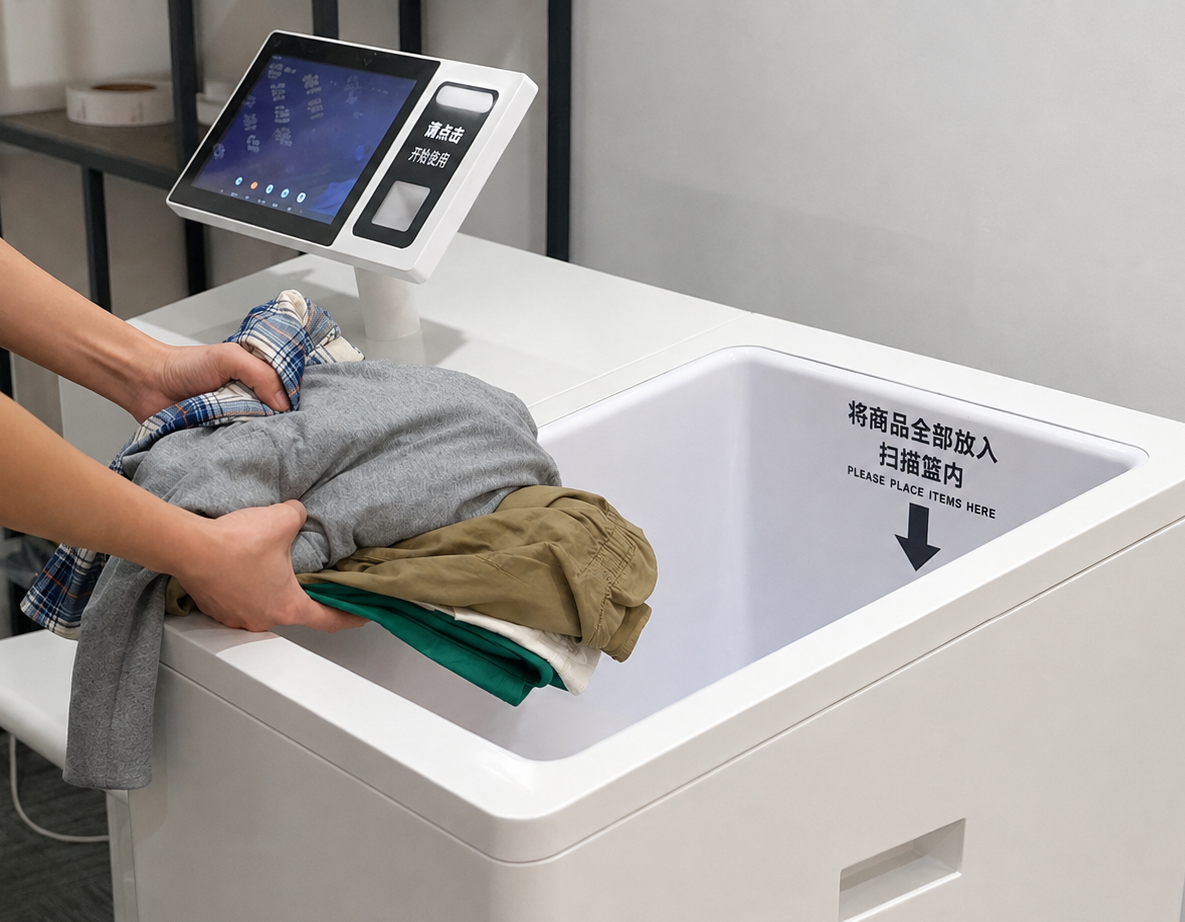
RFID self-checkout and loss prevention for fashion hypermarkets
Faster Checkout. Better Exit Awareness.

Connect the Sale with Item-Level Loss Prevention

RFID checkout equipment can identify multiple tagged garments in one reading zone, helping staffed or self-service checkout process baskets more efficiently than scanning each barcode separately.

When checkout status and RFID exit detection operate within the same workflow, teams gain clearer information about paid and unpaid item movement. The exact deployment is configured around store layout, POS processes and loss-prevention requirements.

Batch Reading Self-Service Checkout POS Integration RFID Exit Detection
Operational Impact

Improve the Retail Workflows That Affect Availability and Service

The objective is not simply to collect RFID reads. It is to turn item-level information into faster execution, fewer discrepancies and a better-managed store.

Faster receivingReduce repetitive item-by-item verification during inbound operations.
More frequent countsMake weekly and exception-based inventory checks more practical.
Better availabilityImprove visibility between the stockroom and the sales floor.
Shorter checkout queuesSupport batch reading and self-service processes during busy periods.
Clearer loss signalsConnect item identity, transaction status and exit events.
Less manual dependencySimplify repeated tasks and reduce reliance on highly experienced operators.
Xiaota Project Experience

RFID Deployed Across a Large Fashion Hypermarket Network

In one Xiaota project documented in our company materials, a large clothing hypermarket chain with more than 500 stores introduced RFID across warehouse and store operations. The deployment included handheld readers, self-service checkout equipment and RFID anti-theft systems.

500+
stores in the documented customer network
15×
reported receiving-efficiency improvement in the project
10×
reported store inventory-counting efficiency improvement
Weekly
counts replaced the previous monthly rhythm

Project outcomes vary according to item volume, store layout, tag performance, system integration and operating procedures. These figures describe the referenced project and are not universal performance guarantees.

From Assessment to Stable Operation

One Partner for Tags, Devices, Software and Implementation

A retail RFID project depends on more than reader performance. Tag selection, reading zones, software rules, POS integration, staff procedures and exception handling must work together. Xiaota coordinates these elements around the customer's existing operation.

01
Process and Site AssessmentReview receiving volumes, store layout, checkout processes, loss risks and existing business systems.
02
Tag and Device ConfigurationSelect UHF RFID labels or tags and configure handheld, desktop, fixed, checkout and anti-theft equipment for the required workflows.
03
Software and System IntegrationConfigure Xiaota RFID software and connect relevant data with ERP, WMS or POS through agreed interfaces.
04
Pilot Testing and OptimizationTest read performance, operating rules and exception handling in the real environment before wider rollout.
05
Deployment, Training and ServiceSupport installation, staff training, go-live and ongoing maintenance so the system becomes part of daily operations.
Frequently Asked Questions

RFID for Fashion Hypermarkets

What is the difference between barcode and RFID inventory counting?

Barcodes normally require line-of-sight and item-by-item scanning. UHF RFID can identify multiple tagged garments without presenting every barcode individually, making frequent cycle counts more practical.

Can Xiaota integrate RFID with our ERP, WMS or POS?

Xiaota provides standard API integration capabilities. The exact interface, data fields and workflow are confirmed during project assessment according to the customer's existing systems.

Can we begin with inventory management before adding self-checkout?

Yes. A project can begin with tagging, receiving and inventory counting, then expand to replenishment, checkout or loss prevention after the item-level inventory foundation is stable.

What equipment may be used in a fashion hypermarket RFID system?

Depending on the workflow, a deployment may use RFID printers, handheld readers, desktop or cabinet readers, fixed reading equipment, checkout readers, self-service checkout and RFID anti-theft gates.

Does Xiaota provide implementation and staff training?

Yes. Xiaota can support process assessment, hardware and software configuration, integration, testing, on-site deployment, staff training and ongoing service.

Plan an RFID Workflow Around Your Fashion Hypermarket

Tell us about your receiving volumes, store layout, inventory process, checkout operation and existing systems. Xiaota can help define a practical pilot and implementation path.

Discuss Your RFID Project

Leave A Message

Leave A Message
If you are interested in our products and want to know more details, please leave a message here, we will reply you as soon as we can.

Home

Products

whatsApp

contact