

Connect Every Item from the Brand Warehouse to the Store Floor
Xiaota connects RFID tags, warehouse operations, store inventory, checkout and product movement data in one practical system for fashion retail brands. Improve inventory accuracy, shorten stocktaking time and create clearer item-level visibility across stores and channels.


Fashion brands manage frequent launches, many styles and sizes, warehouse transfers, thousands of store locations and fast-changing sales activity. When physical goods and system records are disconnected, operational decisions become slower and less reliable.
Piece-by-piece barcode checks restrict receiving and shipping capacity during seasonal peaks.
System stock may not reflect items on the sales floor, in the stockroom, in transit or awaiting returns processing.
Manual counting interrupts store operations and makes frequent cycle counts difficult to sustain.
Payment status and exit monitoring cannot work together effectively without a shared item identity.
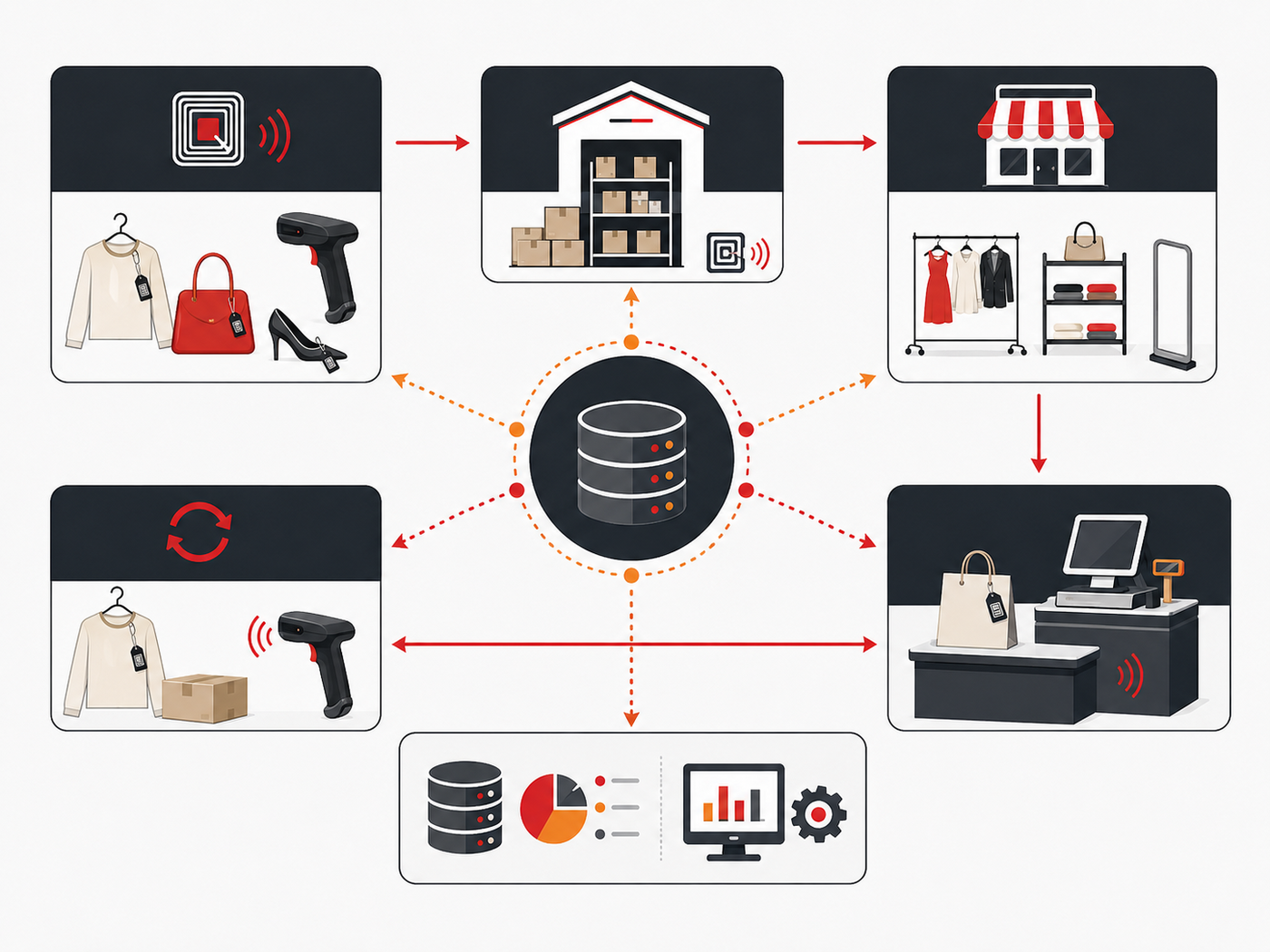
An encoded UHF RFID tag gives every garment a unique identity. Xiaota records key events from tag printing and warehouse handling to store receiving, stocktaking, checkout and returns.
RFID events can synchronize with ERP and POS data, helping brand teams work from a more consistent view of product location, inventory status and transaction history.
Deploy each workflow independently or connect all four as part of a wider RFID program. Every solution is organized around a real operating process rather than a single device.
Print, encode and apply RFID tags to establish a unique digital identity before products enter warehouse and store operations.
Workflows: Tag printing · EPC encoding · Product-data binding
Explore this workflow →Capture multiple tagged products in bulk to accelerate inbound receiving and verify outbound shipments before goods reach stores.
Workflows: Bulk receiving · Quantity confirmation · Shipping verification
Explore this workflow →Maintain a more accurate store inventory through faster receiving, shipping, stocktaking, item movement and returns verification.
Workflows: Store receiving · Stocktaking · Replenishment · Returns
Explore this workflow →Connect batch checkout, paid-item status, exit monitoring and product-level fitting activity to improve store efficiency and merchandise control.
Workflows: Multi-item checkout · POS updates · Exit verification · Fitting insight
Explore this workflow →Handheld RFID readers capture multiple items without individual line-of-sight scanning. Store teams can complete receiving, shipping, stocktaking and item searches in a more consistent workflow.
More frequent counts help identify discrepancies earlier and provide a stronger inventory foundation for replenishment, transfers, click-and-collect and other omnichannel services.
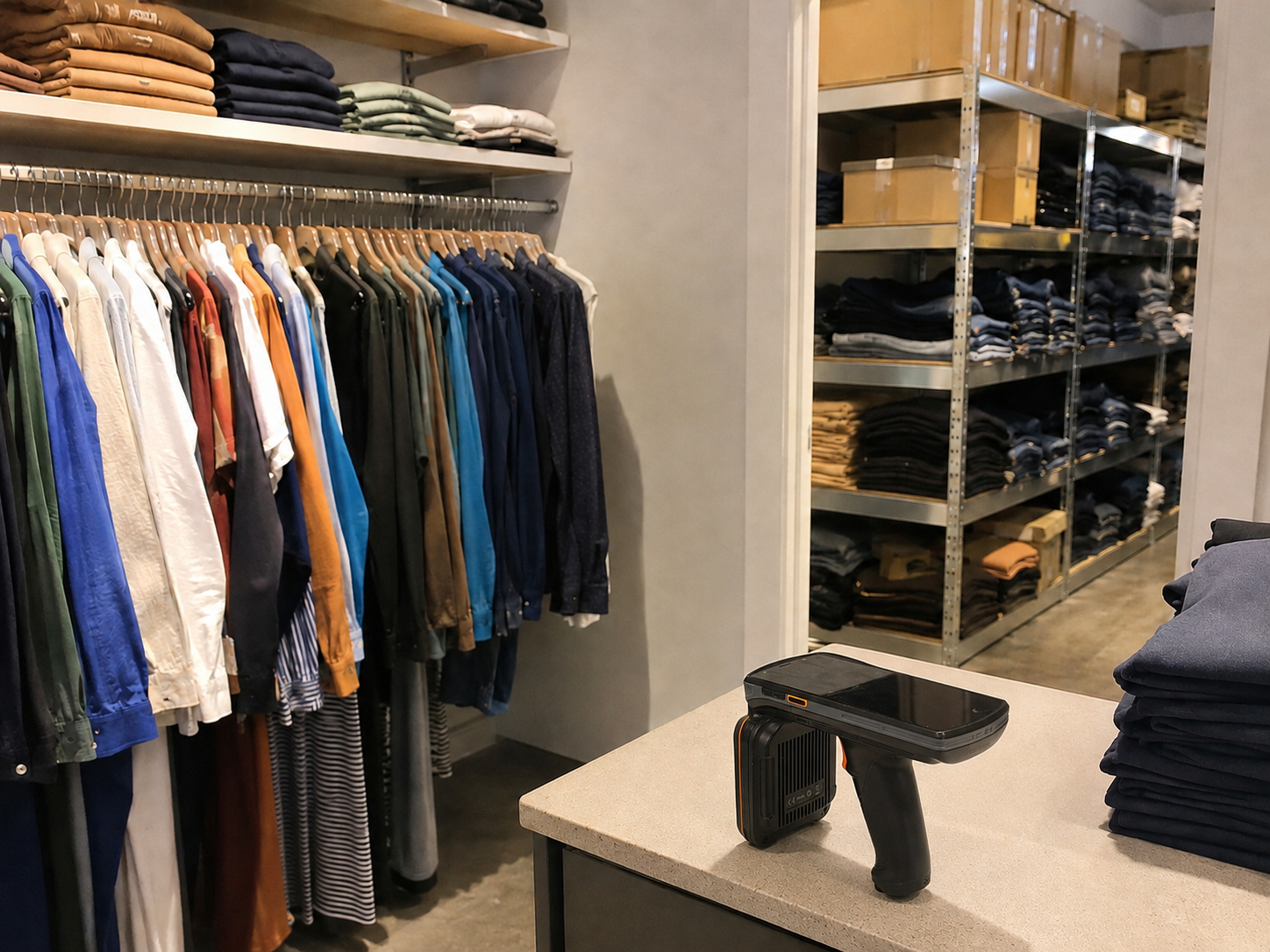
Connect batch checkout, paid-item status, exit monitoring and product-level fitting activity to improve store efficiency and merchandise control.
The same item-level foundation supports warehouse efficiency, store execution, merchandise protection and cross-channel inventory visibility.
Xiaota implemented an RFID management solution for a fashion retail group operating six womenswear brands, one menswear brand, approximately 60 million items annually and 4,000 stores. The project connected RFID operations with the customer’s ERP and POS systems.
Additional reported results: 10× receiving efficiency, 5× shipping efficiency and 100% shipment accuracy.
Deployment: 20 RFID printers, 4,000 handheld RFID readers, 7 desktop RFID readers and 7 RFID cabinet readers.
Results above are specific to this documented customer project. Actual performance depends on workflow, site conditions, product volume, system integration and implementation scope.
Xiaota provides RFID tags, devices, self-developed software, ERP/POS integration, project implementation, training and ongoing service as one coordinated solution.
Yes. Xiaota can connect RFID events with product, inventory, shipment and transaction records. The exact interface and data fields are confirmed during project assessment.
No. Device selection depends on store size, product volume and required workflows. Some stores may begin with handheld inventory operations, while higher-volume locations add checkout or exit-monitoring equipment.
Faster cycle counts and more timely receiving, transfer and returns records improve the quality of stock data used for click-and-collect, ship-from-store and replenishment decisions.
Yes, when system rules and POS integration are configured accordingly. Payment can update item status, and exit monitoring can use that status to identify exceptions for staff review.
Tell us about your brands, warehouses, store network and existing ERP/POS environment. Xiaota can propose a practical pilot covering tags, devices, software, integration and implementation.
Contact us for more RFID solutionsLeave A Message
Scan to wechat :