

Customer Case Study
How a Fashion Brand Built Faster, More Accurate Warehouse Operations with RFID
An end-to-end project spanning source tagging, quality control, warehouse operations, returns and item-level traceability.
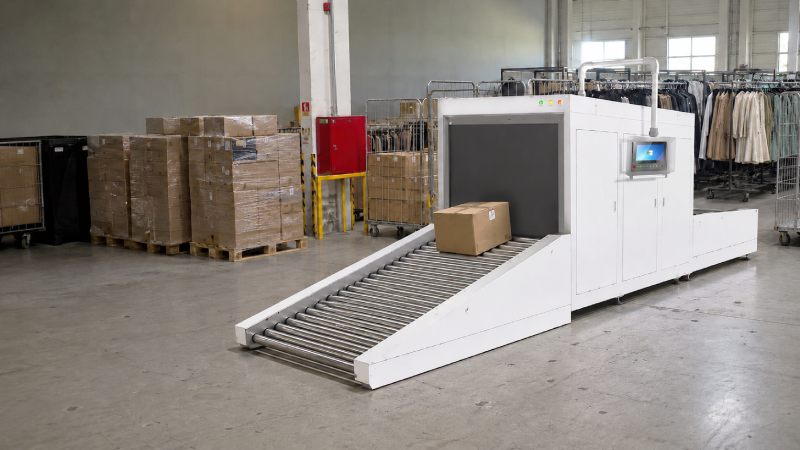
At a glance: Xiaota connected RFID tags, devices, software integration and warehouse workflows to improve receiving, shipping, returns and traceability for a fashion brand.
The client was a fashion brand operating a supplier-to-warehouse workflow that covered new-product tagging, external quality control, inbound receiving, outbound fulfillment, consumer returns, vendor returns and legacy inventory. The brand needed a single item-level identification method that could connect these processes without forcing warehouse teams to scan every garment one by one.
To protect confidentiality, the customer's name and identifying details are not disclosed in this case study.
Xiaota designed an integrated RFID workflow combining item-level tags, three types of RFID devices, application functions and interfaces to the brand's existing ERP and warehouse management environment.
New merchandise used RFID hang tags. Xiaota processed the required tag data by purchase order and supported distribution to suppliers, allowing the RFID identity to be attached before products entered the warehouse flow. Each RFID identity then served as the foundation for later receiving, quality-control, shipping and traceability records.
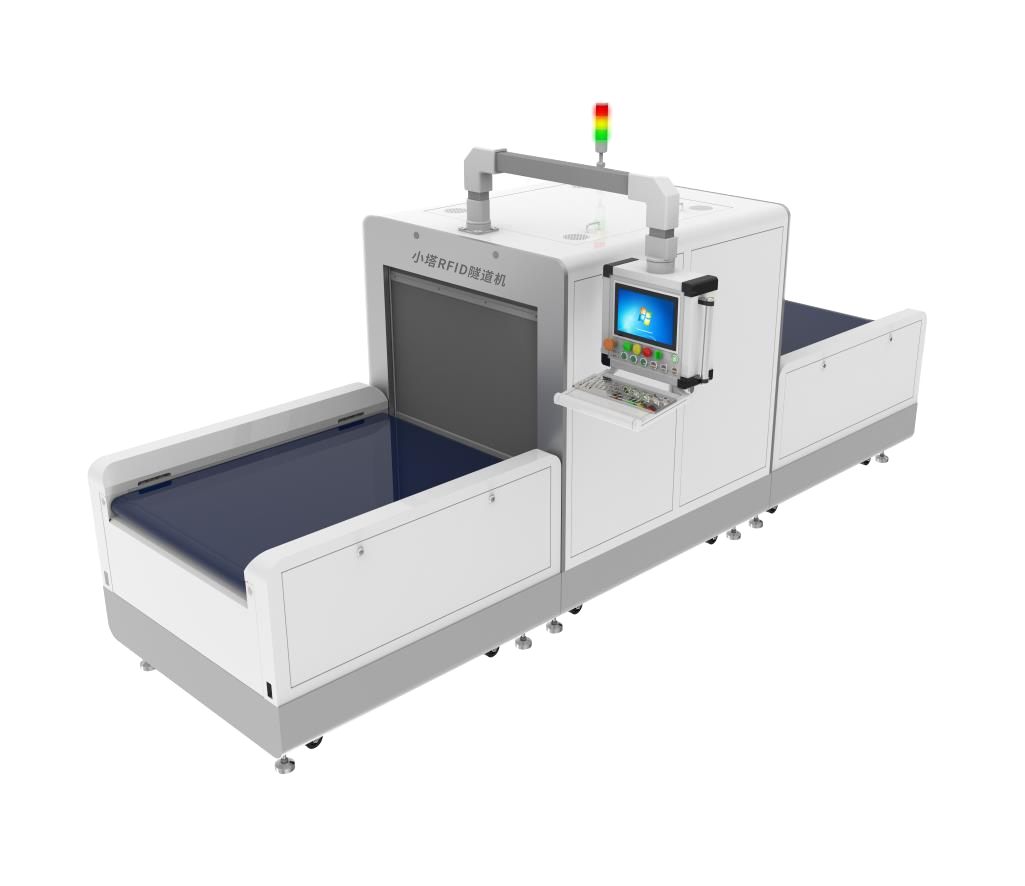
RFID tunnel reader selected for bulk carton scanning.
API and hardware interfaces synchronized master data and operational documents, including product records, supplier data, purchase orders and inbound orders. The integrated workflow retrieved documents, returned scan results and recorded each operational checkpoint, allowing RFID events to become part of the brand's existing warehouse process rather than a separate data island.
Quality-control personnel carried handheld RFID readers to supplier sites. After inspecting an item, they scanned its RFID tag and recorded whether it passed or failed. The record could be associated with the purchase order, production batch, factory, inspector and inspection time. This created an item-level quality history and supported later investigation of non-conforming goods.
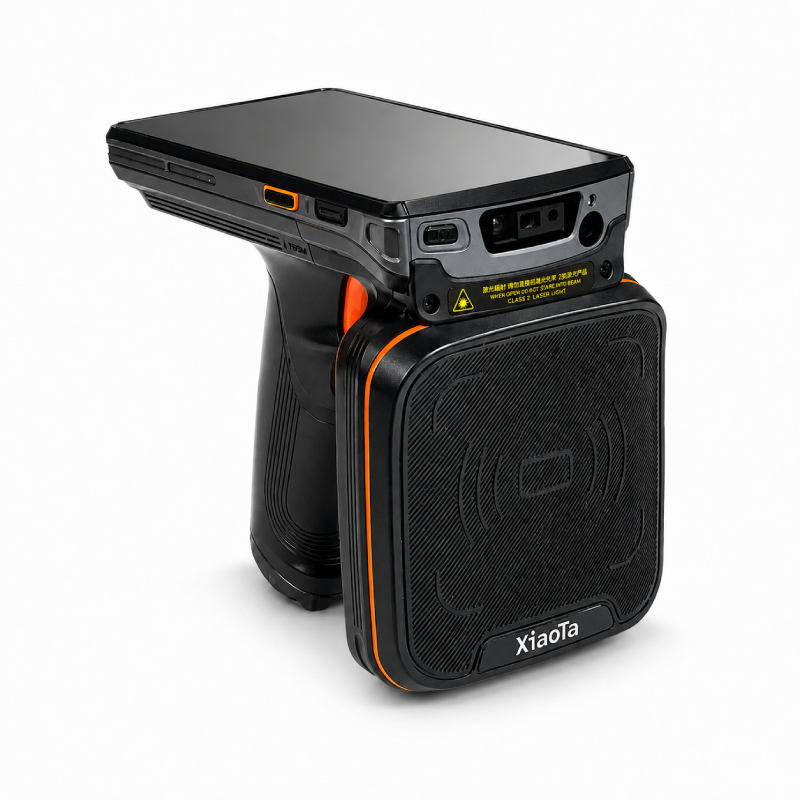
Handheld RFID reader used for mobile quality control and traceability tasks.
When goods arrived, the warehouse first counted cartons against the delivery note and performed sampling or full inspection as required. Staff used handheld RFID readers to mark conforming and non-conforming items, separated them into different cartons and then scanned each carton through the RFID tunnel reader. Scan results were synchronized to the appropriate good-stock or defective-stock warehouse records, with carton labels printed when needed.
For single-item orders, the RFID scan could automatically match the item to the corresponding order. For multi-item orders, the warehouse management system supported sorting before the RFID scanning platform verified that the packed merchandise matched the order. The workflow retained the original order relationship and added a final verification checkpoint before dispatch.
The return workflow connected to after-sales documents and supported scanning by order or parcel. Teams scanned the shipping label and RFID identity for verification. If the original order could not be identified from the parcel, the RFID identity could still be scanned to retrieve related circulation data. Returned goods were graded, packed by condition and transferred to the appropriate destination warehouse.
Defective items were consolidated by supplier. During return-document creation, the RFID process verified supplier origin, while the tunnel reader supported carton-level scanning. This reduced manual handling and helped prevent goods from being returned to the wrong supplier.
Because each RFID tag carried a unique item identity, scans across receiving, quality control, outbound shipping and returns created a reliable traceability trail. Users could scan an item or enter its unique identifier to review supplier, quality-control and circulation records. The result was stronger support for anti-counterfeiting, exception investigation and brand-asset protection.
Existing stock was upgraded through RFID tag binding. For batch binding, products were packed by SKU, the SKU was scanned or entered, and a complete carton was read through the RFID tunnel reader. For item-by-item binding, a handheld reader linked the SKU barcode with the RFID identity. These two methods allowed the brand to select the most practical approach for different stock conditions.
The project achieved measurable improvements across receiving, inventory, outbound operations, returns and traceability.
| Area | Reported Project Result |
|---|---|
| Warehouse receiving | Full-carton receiving implemented; efficiency improved by over 10x |
| Inventory management | Book-to-physical inventory accuracy reached 99.98% |
| Warehouse outbound | Shipping accuracy reached 100% |
| Returns processing | Operational efficiency improved by over 5x |
| Return verification | Returned-item matching to the original order reached 100% |
| Product traceability | Supplier, quality-control and unidentified-return traceability established |
Results note: These figures come from one documented project. Actual results may vary according to item volume, warehouse layout, system environment, operating procedures, device configuration and implementation conditions.
This project shows how an end-to-end RFID implementation can connect supplier tagging, quality control, warehouse receiving, outbound verification, returns and product traceability for a fashion business. By combining RFID tags, devices, software functions, system interfaces and implementation support, Xiaota helped the brand build a faster and more reliable operational data foundation.
Planning an RFID project for your fashion supply chain or warehouse?
Talk with Xiaota about your tagging, warehouse, returns and system-integration requirements.
Request an RFID Project AssessmentSolutions: Fashion Retail Brands | E-Commerce | Wholesale
Products: RFID Hang Tag | RFID Tunnel Reader | RFID Scanner | RFID Reader
Leave A Message
Scan to wechat :